Telephoto Fieldcraft: Shooting From Low Angles, Using Cover and Holding a Long Lens Steady
A long lens gets you closer. It doesn’t get you good pictures on its own. Most disappointing wildlife photos from a new 600mm zoom share the same faults: shot from standing height, looking down at the animal, with a busy background and a little bit of blur. None of those has anything to do with the lens.
The fixes are old and simple. Get low. Use cover. Brace the lens. They work with any brand and any telephoto, cheap or expensive.
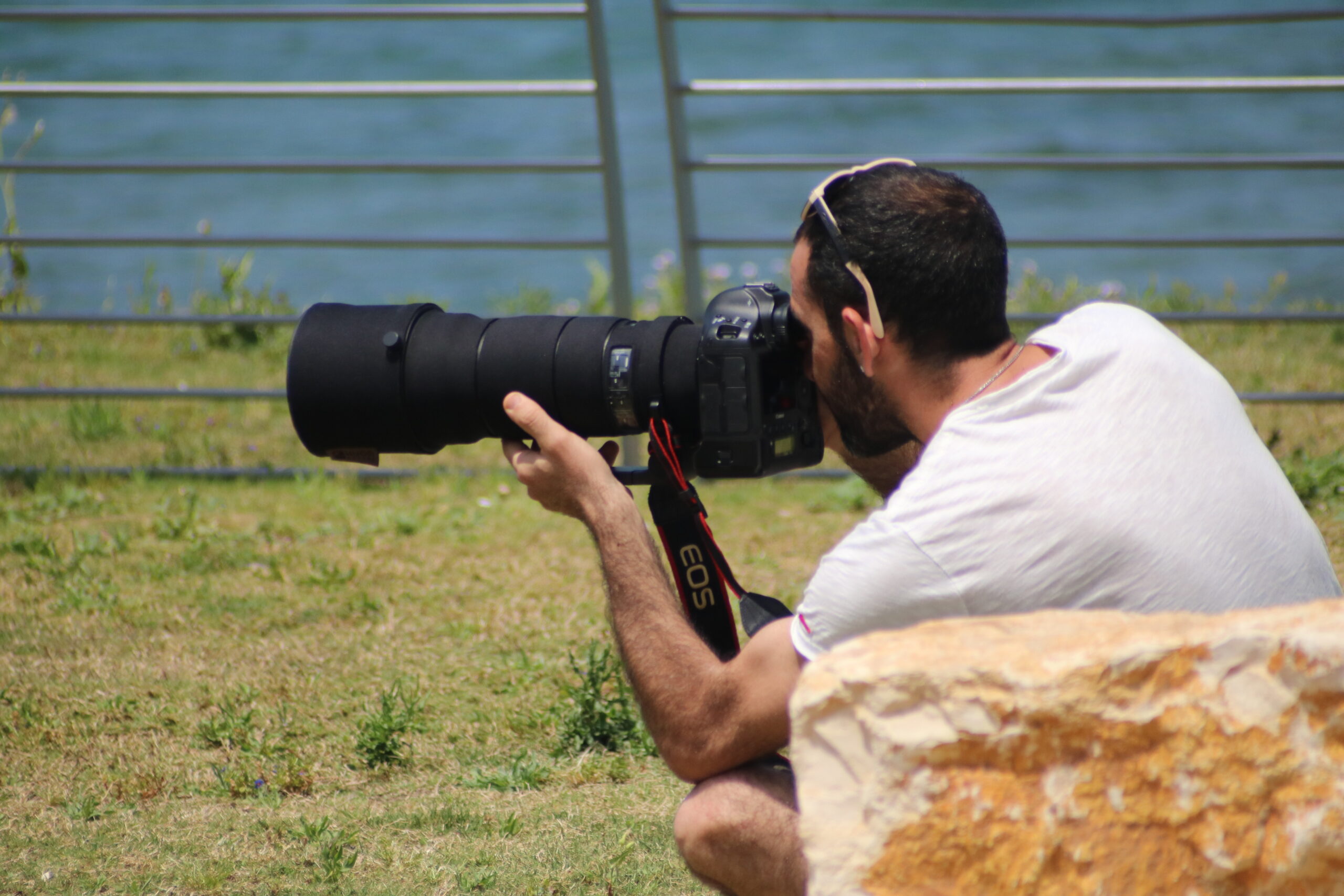
The photographer below has all three right. He’s crouched behind a rock at the water’s edge, the long lens pointing level across the grass, elbow tucked, body still. Whatever he’s waiting for won’t see much of him.
Get down to eye level
Shooting from standing height makes animals look small and ordinary. You see the top of the bird’s head and the ground behind it.
Drop to the subject’s eye level and everything changes. The animal looks back at you. The background moves from the ground a meter behind it to whatever’s far away, often water, trees or sky, and a long lens turns that distance into soft color. For birds on the ground or ducks on water, that can mean lying flat.
Knee pads, a waterproof mat or an old bin bag make this bearable. A camera with a tilting screen helps a lot, so you can frame without your face in the mud.
Use cover and let animals come
Animals notice movement and outlines long before they notice color. A person standing in the open is a tall, moving shape. The same person crouched beside a rock, a tree trunk or a bush, keeping still, mostly disappears.
So find your spot first, then wait. Ten minutes of stillness does more than ten minutes of creeping closer. Many animals settle back to normal once you stop moving. Walk in slowly, stop often, and avoid looking directly at the subject while you approach.
Shoot early and late. Animals are more active in the first and last two hours of light, and the low sun helps your pictures too.
Hold the lens steady
Long lenses magnify shake along with the subject. In-body and lens stabilization help a lot, but technique still matters.
Brace your left hand under the lens, near its balance point, not under the camera. Tuck your elbows against your body or rest them on your knees. Exhale slowly and press the shutter at the bottom of the breath, or hold a burst.
Better still, rest the lens on something. A rock, a railing, a fence post or a bean bag thrown over a car window is steadier than any hand-holding. A monopod is the best compromise when you have to move.
As a starting point, keep the shutter speed at about one over the focal length, then go faster for moving animals: 1/1000 sec or faster for birds in flight.
Which lens
Lighter lenses make all of this easier. Hand-holding a 1.7-kilogram zoom for an hour is possible. A 2.5-kilogram one wears you down fast. Our Sony wildlife lens guide compares weights, and the Canon RF 100-400mm and Nikon Z 180-600mm reviews cover the other systems.