Sony Wildlife Lens Combos: Tamron 150-500mm, Sony 200-600mm or Sigma 150-600mm on the A6700 and A7 V
Sony has the widest choice of long telephoto zooms of any mirrorless system, and that’s the problem for anyone starting out in wildlife. Sony makes its own. Tamron makes two. Sigma makes two. They all reach somewhere between 400mm and 800mm, cost roughly the same, and differ mostly in weight. Weight is what decides whether you carry the lens for six hours or leave it in the car.
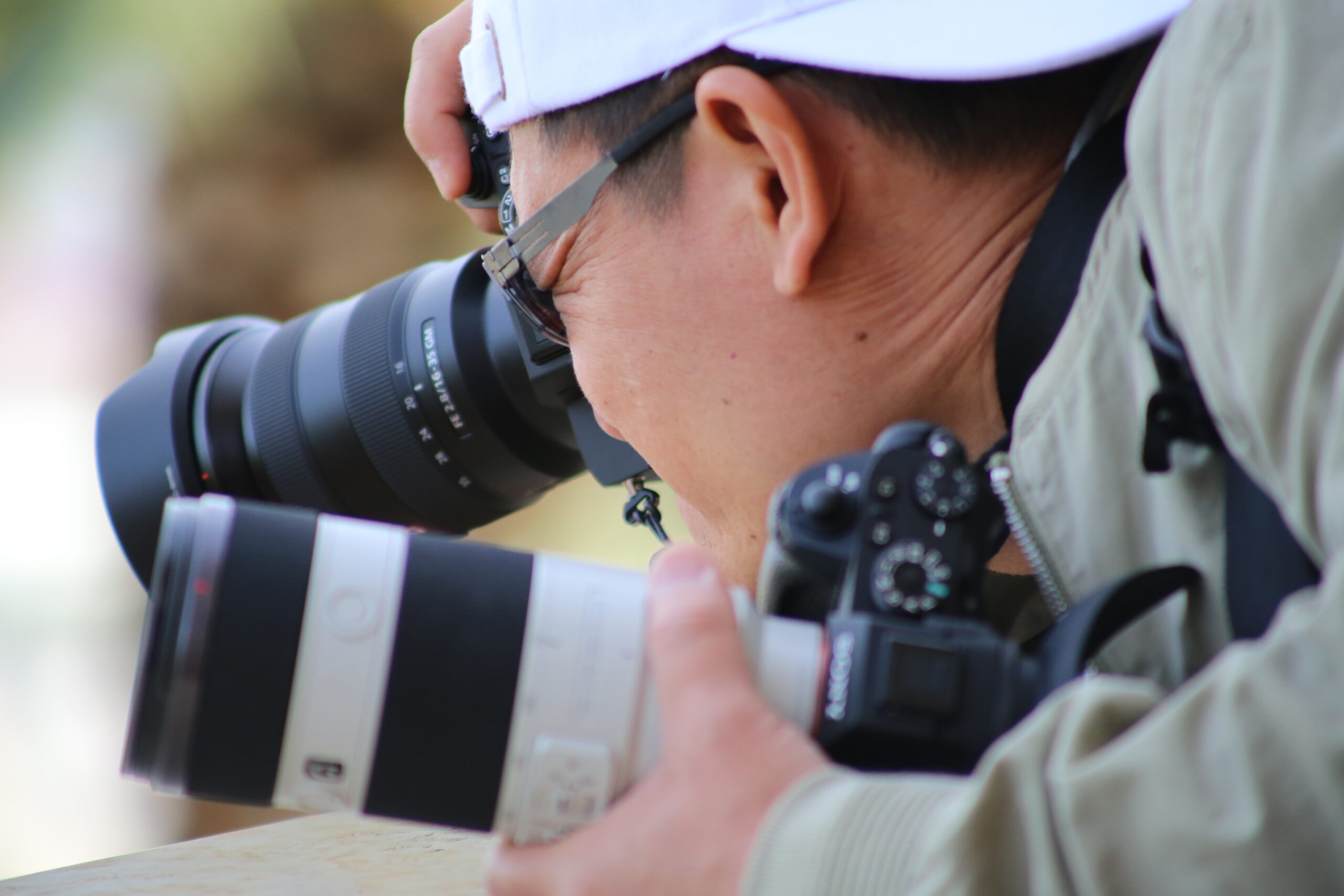
The photo below shows a typical bird-hide setup: a Tamron 150-500mm on one Sony body and a white Sony telephoto on a second. Two bodies, two lenses, no lens changes when a bird lands somewhere unexpected.
The three 500-600mm zooms
Tamron 150-500mm F5-6.7 Di III VC VXD. The lightest of the three at 1,725 grams without its tripod foot. It launched in 2021 at $1,399 and has optical stabilization and Tamron’s VXD linear motor. It extends as you zoom, and its 500mm long end is the shortest here. It’s the one you can hand-hold all morning.
Sony FE 200-600mm F5.6-6.3 G OSS. The classic Sony choice since 2019, at about $2,000 and 2,115 grams. It zooms internally, so its length and balance never change, which matters on a gimbal head or a monopod. It also works with Sony’s 1.4x and 2x teleconverters.
Sigma 150-600mm F5-6.3 DG DN OS Sports. About $1,499 and 2,100 grams, with a wider starting point than the Sony and Sigma’s Sports-line build. It extends when zooming.
If you want the lightest kit for walking, buy the Tamron. If you shoot from hides and tripods, the Sony’s internal zoom is worth the extra weight.
Lighter and longer options
The Tamron 50-400mm F4.5-6.3 weighs 1,155 grams and starts at 50mm. It’s the zoo, safari and kids’-sports lens: less reach, much more flexibility.
The Sony FE 400-800mm F6.3-8 G OSS, launched in February 2025 at $2,899.99, reaches 800mm for small birds at distance. It’s heavy at 2,475 grams.
At the top end, Sony’s new FE 100-400mm F4.5 GM OSS, announced in May 2026 at $4,299.99, keeps a constant f/4.5 and zooms internally. It weighs 1,840 grams. It’s a pro lens for pro bodies.
Which body
APS-C gives you reach for free. On the Sony A6700, the 1.5x crop turns the Tamron 150-500mm into a 225-750mm equivalent. That’s a light, affordable bird kit, and the A6700’s AI autofocus recognizes birds and animals well.
Full frame gives you cleaner files at dawn and dusk. The Sony A7 V, with its faster partially stacked sensor, is the sensible full-frame wildlife body for most people. The A7R V lets you crop deep into 61MP files, which works like extra focal length. Sports and bird-in-flight specialists go to the A1 II or A9 III.
One caveat for those last two bodies: Sony limits continuous shooting with some third-party lenses to slower burst rates than its own lenses get. If you need the full 30 or 120 frames per second, buy Sony glass.
Three combos that work
A6700 with the Tamron 150-500mm: the best-value bird kit on Sony, about 2.2 kilograms together.
A7 V with the Sony 200-600mm: the reliable all-rounder for hides, safaris and tripods.
A7 V or A7R V with the Tamron 50-400mm: for zoos, safaris and travel where animals come close and far.
For a similar approach on other systems, see our reviews of the Nikon Z 180-600mm and the Canon RF 200-800mm.