Building a Cinema Camera Rig: Cage, Monitor, Power and Follow Focus, and What to Skip
A cinema camera out of the box is a small, bare block. By the time it’s on set it has grown a cage, a top handle, a monitor, a battery plate, a microphone and sometimes a follow focus and matte box. The rigs on a store’s video counter show the finished look, and they’re intimidating if you’re starting out.
The good news is that you don’t need most of it. Each piece solves one problem, and you only need the pieces that solve your problems.
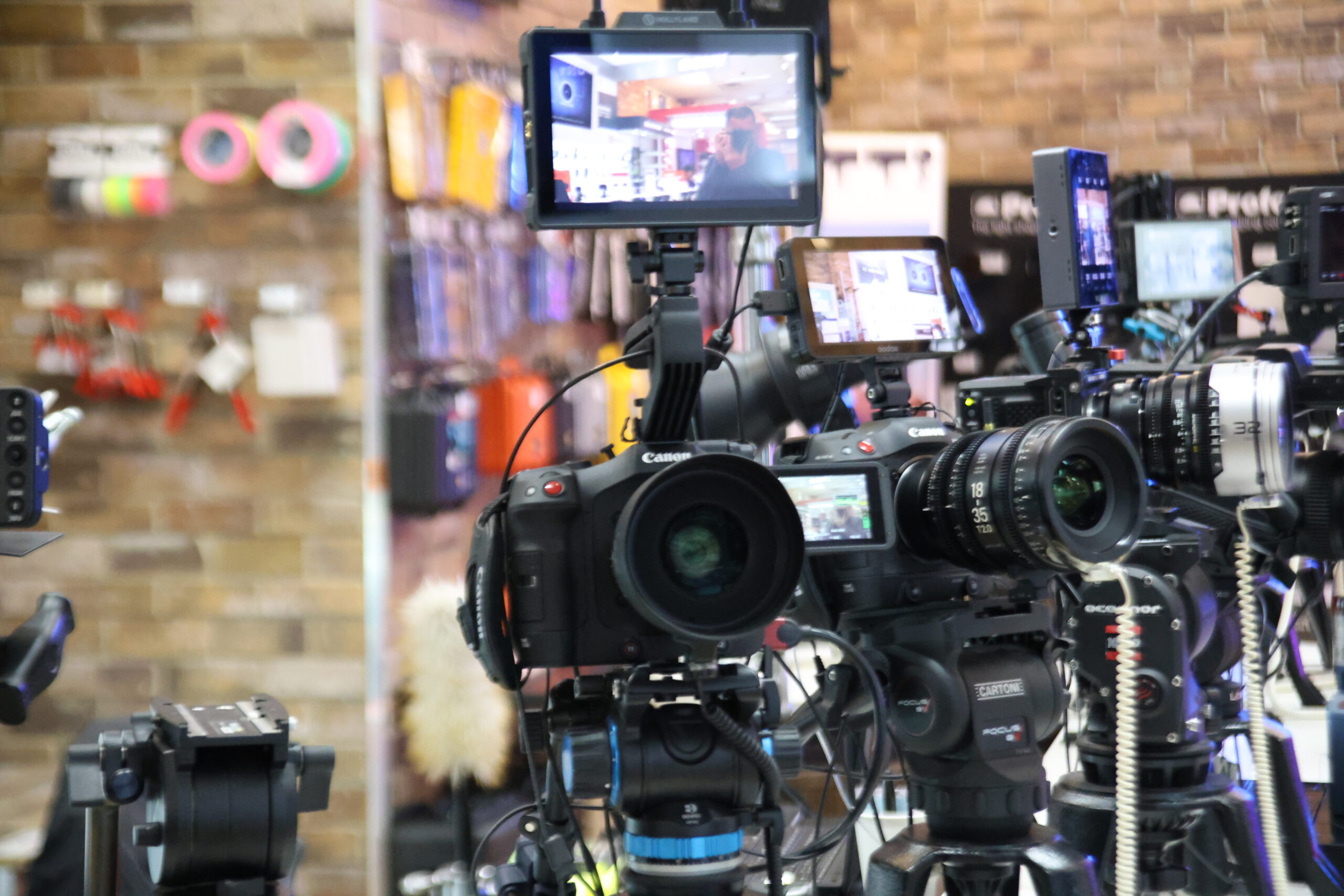
Photo: Media Gallery
Start with a cage and a handle
A cage is a metal frame that wraps the camera and gives you threaded holes to mount things. A top handle lets you carry the rig low for moving shots and gives the microphone and monitor somewhere to sit.
This is the one accessory almost everyone should buy, because everything else bolts onto it. Buy a cage made for your exact camera model so it doesn’t block ports or the battery door.
A monitor, if the screen isn’t enough
Built-in screens are small and hard to see in sunlight. An external monitor of 5 to 7 inches makes focus and framing much easier, and many add tools like false color for exposure and focus peaking.
Some monitors also record. A monitor-recorder can capture ProRes or ProRes RAW from cameras that output it over HDMI, giving you higher-quality files than the camera records inside. Cameras like the Panasonic Lumix GH7 and Nikon ZR now record high-end codecs internally, so check before buying a recorder you don’t need.
Power: the hidden problem
Small camera batteries last tens of minutes in 4K. For long takes, interviews or events, run the camera from a large external battery. V-mount and smaller NP-F style batteries mounted on the back of the rig, feeding the camera through a dummy battery or USB-C, can power the camera, monitor and lights all day.
Follow focus and matte box: only for cine lenses
A follow focus turns the lens’s focus ring through a geared wheel, so you or a focus puller can make smooth, repeatable pulls. It works best with cine lenses, which have geared rings and long focus throws. Photo lenses with autofocus and short, focus-by-wire rings don’t benefit much. We explain the difference in our guide to cine lenses versus photo lenses.
A matte box controls flare and holds filters. It’s useful on narrative shoots and overkill for most YouTube and event work.
Support
Put the rig on a proper video tripod with a fluid head. The rigs in the photo sit on heavy fluid heads for a reason: smooth pans and tilts are impossible on a photo ball head.
A sensible first rig
Cage, top handle, a 5-inch monitor, a large battery with a plate, a shotgun mic on the handle. That’s enough for interviews, events and most commercial work, on a camera like the Sony FX30 or Nikon ZR.
Add pieces when a real shoot shows you need them. A rig built from a wish list is heavy, slow and mostly unused.