Best Canon Travel Camera and Lens Combo Is the EOS R8 Mark II With the RF 28-70mm F2.8
Stand under the astronomical clock in Prague a few minutes before the hour and count the cameras. Phones, mostly. Then a few big Canon bodies with red-ringed L zooms held over everyone’s heads, the kind of kit that weighs close to two kilograms once the hood goes on.
Those shooters get the apostles on the first try. They also carry that weight up the castle steps, across Charles Bridge and back again, every day of the trip. By day four, half of them leave it in the hotel.
There’s a better Canon kit for this. The new EOS R8 Mark II with the RF 28-70mm F2.8 IS STM gives you full frame, f/2.8 for night streets and stabilization in both body and lens, for about 1,040 grams in total. That’s roughly what a single L zoom weighs on its own.
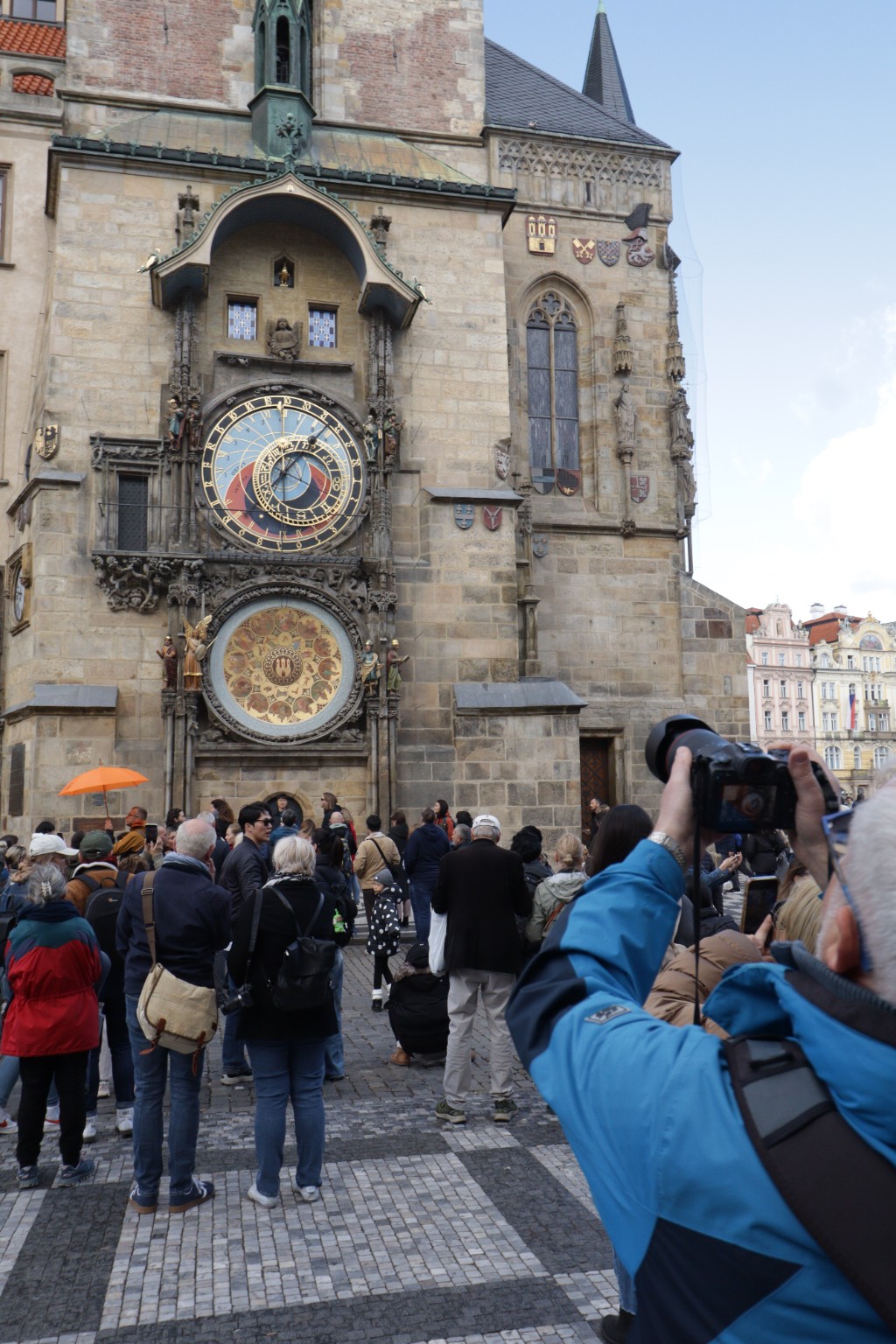
Photo: Media Gallery
Why the R8 Mark II changes the Canon answer
The original EOS R8 was always the lightest way into Canon full frame, but it had no in-body stabilization. You had to keep a stabilized lens on it, which ruled out most fast primes for handheld evening shots.
The Canon EOS R8 Mark II, announced in September 2026 and shipping from late October, fixes that. Canon rates its stabilization at up to 7.5 stops at the center of the frame. The body weighs 546 grams with battery and card, about 85 grams more than the first R8, and it gains a focus joystick and oversampled 4K at 60p. It’s $1,899 for the body.
It keeps the small LP-E17 battery and a single card slot. Pack two spare batteries. On a long day of shooting and checking pictures, you’ll use them.
The lens that does the work
The RF 28-70mm F2.8 IS STM is the reason this kit beats the L crowd. It weighs 495 grams, launched at $1,099 and keeps f/2.8 through the whole range, so a dim church interior or a lit square at 10 pm stays usable without pushing ISO to the ceiling.
You give up the 24mm wide end. In narrow old towns you’ll feel it. Step back, or shoot a quick vertical panorama of the facade. You also give up some reach: 70mm frames a face across a table, not a detail on a bell tower. For most trips that’s fine.
Lighter and longer Canon kits
The pocket kit. The R8 Mark II with the RF 24-50mm F4.5-6.3 IS STM, its $2,099 kit lens, comes to about 756 grams. The zoom weighs 210 grams and starts at 24mm. It’s slow, so this is a daylight kit, but it fits a small sling bag. Add the 120-gram RF 28mm F2.8 STM pancake for evenings.
The one-lens kit. The RF 24-240mm F4-6.3 IS USM weighs about 750 grams and covers everything from a room to a rooftop statue. On the R8 Mark II it makes a kit of roughly 1.3 kilograms, and you never change lenses in the rain.
The wide add-on. Cities full of tight alleys reward a second lens. The RF 16-28mm F2.8 IS STM weighs 445 grams and pairs naturally with the 28-70mm. The cheaper RF 15-30mm F4.5-6.3 IS STM does the same job in daylight for $549 at launch.
The APS-C kit. An EOS R50 with the RF-S 18-150mm F3.5-6.3 IS STM is about 685 grams and covers 29-240mm in full-frame terms. For brighter light inside, Tamron’s new 16-50mm F2.8 A, announced in October 2026 for Canon RF APS-C among other mounts, weighs 305 grams.
Who should still carry the L zoom
If you sell your travel pictures, shoot events on the road or need weather sealing in serious rain, the L glass earns its weight. An EOS R6 Mark III with an L zoom is a working kit.
For everyone else under that clock, the RF 28-70mm F2.8 on an R8 Mark II gets the same shot. And it’s still with you on day nine.
Comparing systems? Our travel combos by brand guide puts the Canon kit next to Sony, Nikon, Fujifilm and Lumix.
As an Amazon Associate I earn from qualifying purchases.