Canon RF 16-28mm F2.8 IS STM Review: A Compact f/2.8 Wide Zoom With Stabilization
Canon’s L-series wide zooms are superb and expensive. The RF 16-28mm F2.8 IS STM, announced in January 2025, offers a cheaper route to a constant f/2.8 wide zoom on full frame. Digital Camera World lists its launch price at $1,149, and it has since sold for under $1,000. It weighs 445 grams.
It’s a twin of the RF 28-70mm F2.8 IS STM. The two lenses share the same retracting design and almost the same size, so swapping one for the other on a gimbal needs very little rebalancing. Together they cover 16-70mm at f/2.8 for much less than Canon’s L glass.
A 16mm lens is for spaces you want to show whole: a market square, a church interior, a street that opens out in front of you.
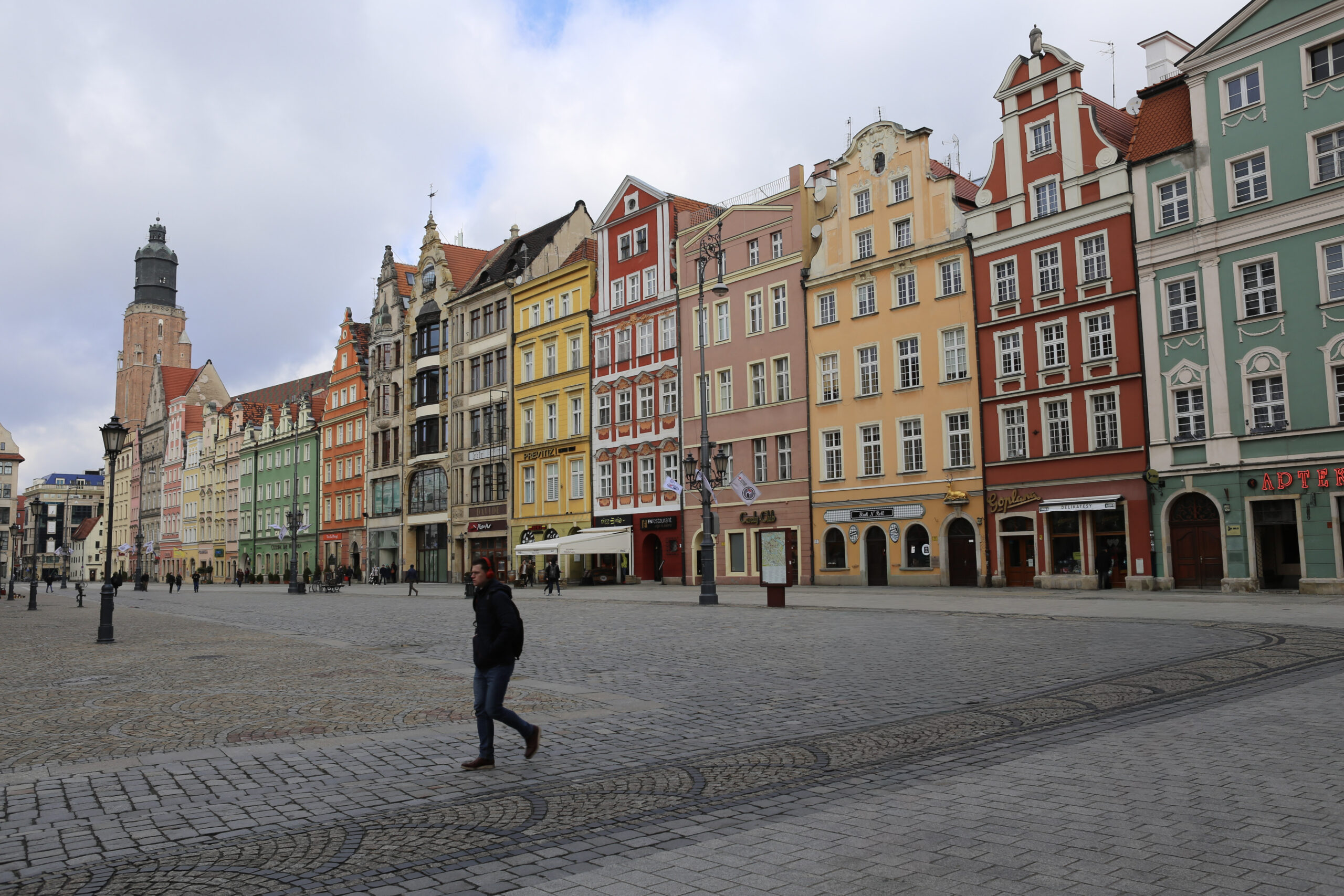
Photo: Media Gallery
Gordon Laing’s first-look video compares it with Canon’s RF 15-30mm and RF 15-35mm L.
Video review: Gordon Laing (first looks)
Design
The optical formula is 16 elements in 13 groups, including two aspherical and four UD elements. The aperture has nine blades and the filter thread is 67mm, which makes polarizers and ND filters cheap.
Optical stabilization is rated at 5.5 stops on its own and up to 8 stops when combined with in-body stabilization. That’s unusual on a wide zoom and very useful for handheld video and dim interiors. Close focus is 0.25 meters at 16mm.
The lens retracts when stored and extends when you set it to shoot. It’s sealed against dust and moisture, with a rubber gasket at the mount, which is rare for a non-L Canon lens. The STM motor is quiet, and compatible bodies can correct focus breathing in camera.
How it performs
Camera Labs found it sharp into the corners even wide open, and both Camera Labs and Digital Camera World praised how much you get for the price: f/2.8, stabilization and sealing in a small body.
The trade-offs are clear. The lens relies on in-camera correction for distortion and vignetting, so raw files need a profile. There’s only one ring, which you switch between focus and control duties, and no separate control ring. Camera Labs found autofocus slower than the RF 15-35mm f/2.8L for stills, though fine for most use. And there’s no hood in the box.
Who it’s for
Canon full-frame owners who want a small, light wide zoom for travel, architecture, vlogging and events. On bodies like the Canon EOS R8 or R6 Mark II it keeps the kit compact, and it’s a good match for the Canon EOS C50, which has no in-body stabilization.
If you want wider, the Canon RF 10-20mm F4 L IS STM goes to 10mm at about twice the price. The RF 15-35mm f/2.8L remains the pro choice, and the RF 14-35mm f/4L takes front filters while costing less. For the full L-series set, see our Canon RF holy trinity.